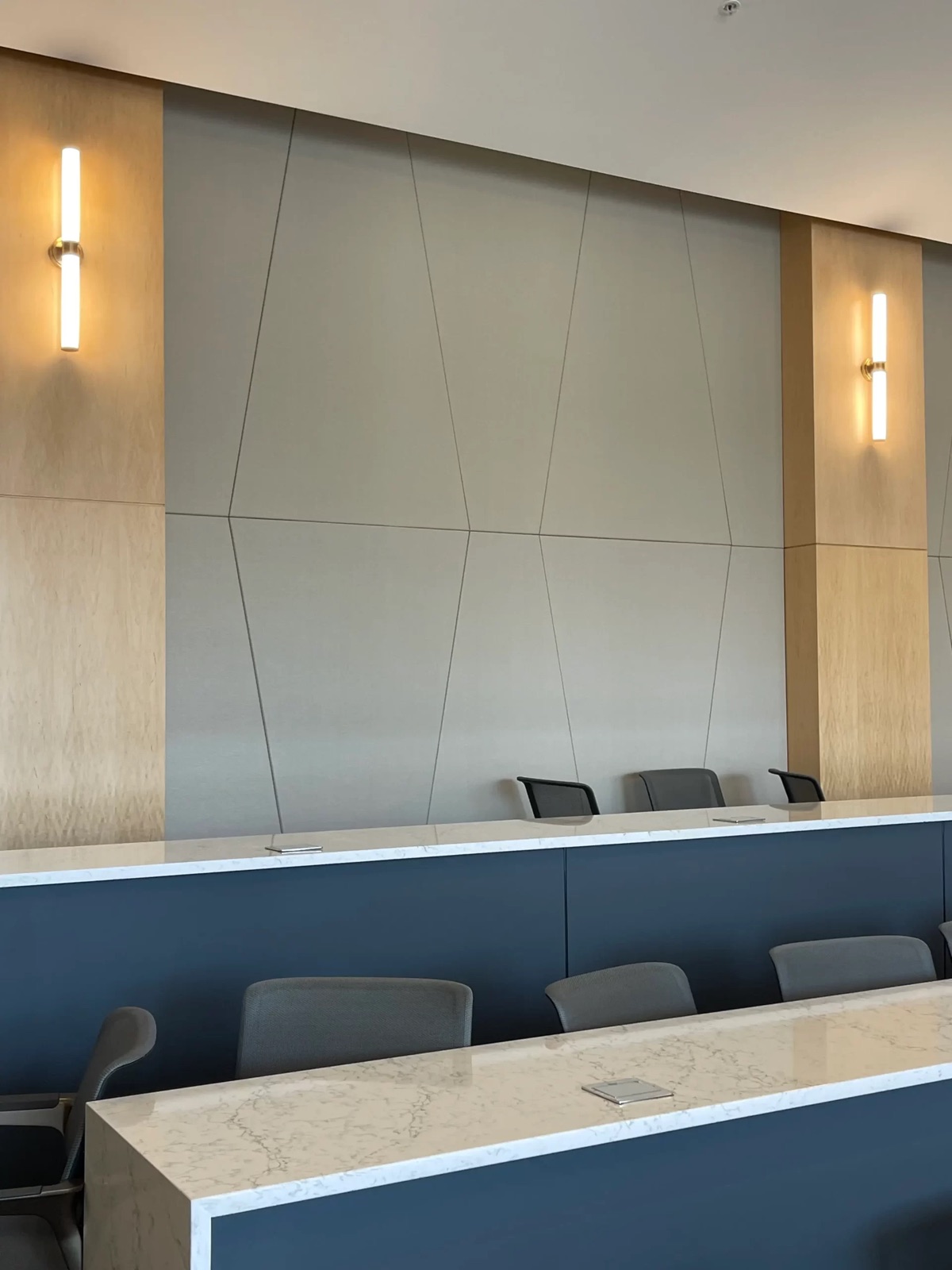
Fabric-finished acoustic wall panels integrated into a commercial boardroom wall
Representative QTS project contextA visible wall plane coordinated with the room

ACC-U-SOUND · Absorptive + tackable wall surface

Make the wall absorb sound—and keep working.

ATP combines a rigid-fiberglass acoustic core with a smooth high-density tackable face. Coordinate thickness, finish, edge and attachment with the way the room will be used.

Placement
Wall
Function
Absorption + tackable surface
Reference construction
Rigid fiberglass + smooth face
Project inputs
Thickness · size · edge · finish · mounting

ATP product role

One panel plane. Two jobs.

ATP is the QTS family for projects that need acoustic absorption and a fabric-finished surface that can accept tacks.

The published construction adds a 1/8-inch high-density smooth fiberglass face to a 6–7 PCF rigid-fiberglass core. That face is the defining distinction from a general AWP panel and from the mineral-fiber construction used by TP.

What it does
Provides an absorptive wall treatment with a smooth tackable face.
What changes
Core thickness, panel dimensions, edge profile, textile and mounting.
What to verify
Tack use, sample appearance, selected assembly data and field attachment.
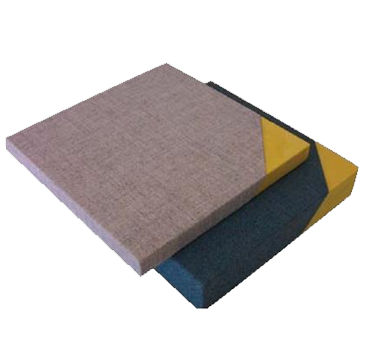
ACC-U-SOUND ATP product sample showing the fabric finish, smooth face sheet and rigid core
Published product referenceComposite tackable construction

The product page and PDF describe the face-sheet density differently; confirm the current construction for the selected panel.

Configuration ledger

Resolve the tackable assembly, not just the fabric.

Published ATP choices create a starting point. Confirm that the chosen core, face sheet, edge, finish and mounting work together in the current assembly.

Core + face

Published reference6–7 PCF rigid fiberglass with a 1/8-inch smooth fiberglass face. The web page lists 10–12 or 18–20 PCF face material; the PDF specification names 10–12 PCF.

Project decisionConfirm the current face-sheet density and complete assembly.

Thickness + size

Published reference3/4, 1⅛, 1⅝, 2⅛, 3⅛ and 4⅛ inches; published maximum 48 × 120 inches nominal.

Project decisionSelect dimensions, tolerances and any custom shape or larger-size request.

Edge

Published referenceSquare, bevel, miter, radius or kerfed for spline; aluminum edge is listed for square panels.

Project decisionCoordinate profile, reveal, corner detail and field conditions.

Finish

Published referenceGuilford FR701 2100 Series is listed as standard; other fabrics and perforated vinyls are referenced.

Project decisionVerify tack performance, color, texture, cleanability and applicable test data.

Mounting

Published referenceAdhesive with impaling clips, mechanical clips and concealed spline are published; the specification also references Z-clips.

Project decisionConfirm substrate, attachment, access and installer responsibilities.

Published acoustic reference

Published absorption varies with thickness.

Use these ATP values as a product-family reference. Specify against current test documentation for the selected construction, finish and mounting.

Open the ATP product PDF
ATP published product reference
Published thicknessPublished NRC
3/4 inch0.55–0.60
1⅛ inches0.85
1⅝ inches0.95–1.00
2⅛ inches0.95–1.00
3⅛ inches1.00–1.05
4⅛ inches1.00–1.05

NRC is an absorption rating; it does not establish sound isolation between rooms or confirm tackability. Request the ASTM C423 report that applies to the selected panel.

Fire-test boundary

The source specification ties its ASTM E84 Class A statement to panels with the standard fabric. Confirm current fire-test documentation for the exact face, finish and assembly.

Published applications

Place the product in the right room condition.

QTS publishes ATP for occupied interiors where acoustic treatment and a tackable surface may share the same wall area.

Learning spaces

  • Classrooms
  • Gymnasiums

Work + civic

  • Conference rooms
  • Court rooms

Circulation + offices

  • Corridors
  • Offices

Documents & coordination

Build a current ATP project record.

The linked ATP PDF is the product reference currently published by QTS. Its template is not treated here as an automatically current submittal.

Request current project documents
Product source boundary

The current ATP page and published PDF are aligned on the family’s purpose but differ in the face-sheet density wording. Do not collapse those references into a single unverified value.

Selection record

Record the selected construction, dimensions, finish, edge and mounting together. Request samples and current acoustic and fire-test documentation that match that assembly.

Field coordination

Confirm field dimensions, substrate, penetrations, adjacent finishes, installer scope and access requirements before fabrication or procurement.

ATP questions

Clarify the assembly before specification.

Use the published information to frame product review, then verify the exact assembly and evidence with QTS.

How is ATP different from TP?

ATP uses a rigid-fiberglass acoustic core with a bonded smooth fiberglass face. TP is published with a 16 or 24 PCF perforated mineral-fiberboard core. Treat them as different constructions and compare current samples and documentation.

Can every ATP finish be tacked the same way?

The sources identify ATP as tackable, but the selected fabric, face construction and intended tack use should be confirmed with QTS. Request a representative sample when surface function matters.

Does the ATP NRC block sound between rooms?

No. NRC describes absorption in the test configuration; it is not an STC or partition-isolation rating.

Which face-sheet density should I specify?

The web page lists 10–12 or 18–20 PCF while the PDF specification names 10–12 PCF. Request current assembly-specific product data before specifying a density.

What project information should I send?

Send wall elevations or dimensions, substrate, room use, expected tack activity, acoustic criteria, finish direction, penetrations and project location.

Have an ATP condition to review?

Turn a working wall into part of the acoustic plan.

Share the room, wall condition, expected tack use and project criteria. QTS can help organize the ATP decisions and current documents that follow.