
Core + face
Published reference6–7 PCF rigid fiberglass with a perforated 1/16-inch copolymer face sheet.
Project decisionConfirm the current face construction and the project’s impact requirement.
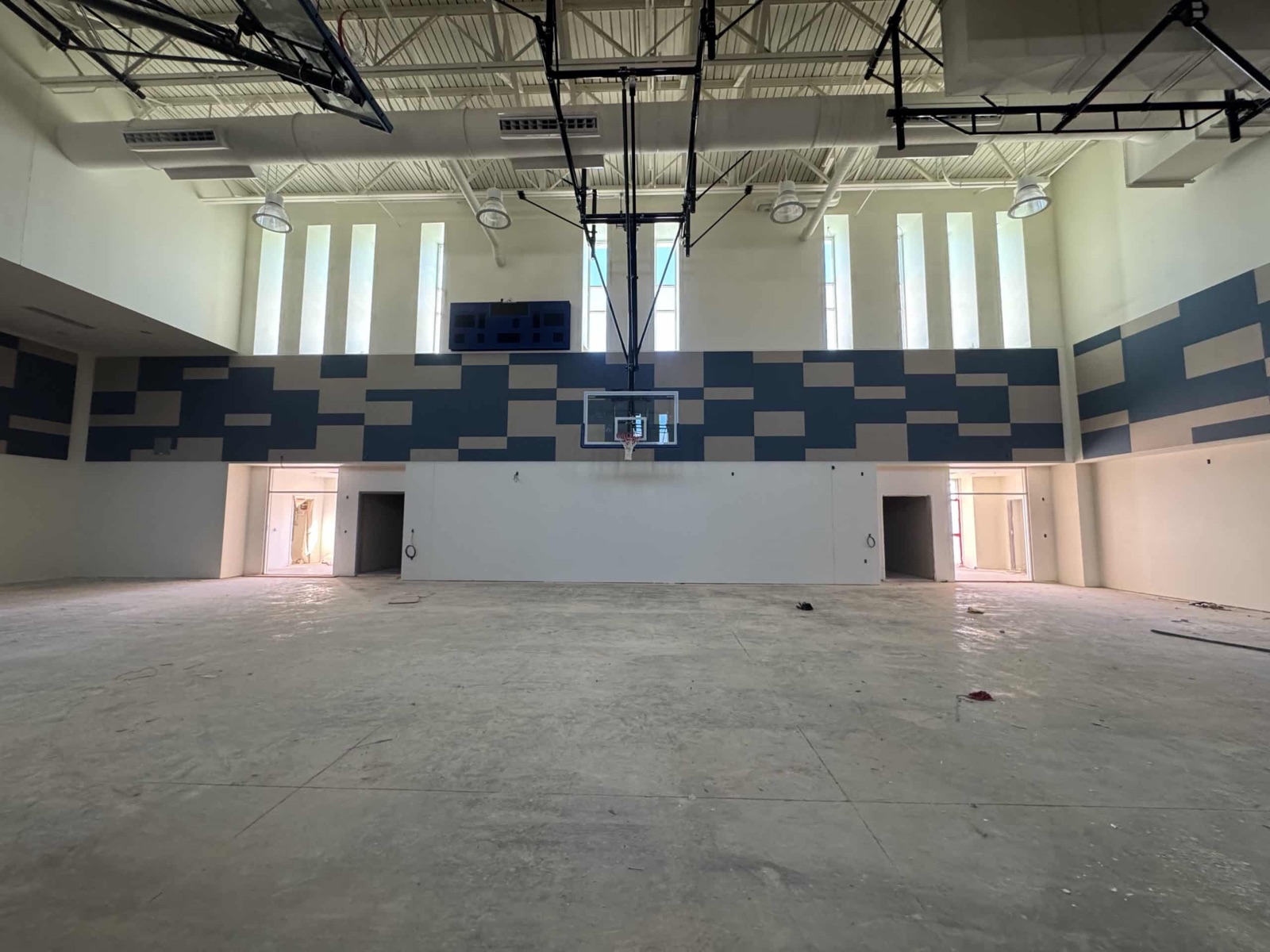
ACC-U-SOUND · Fabric-finished high-impact panel
HIP I adds a perforated copolymer face beneath a fabric finish. It is a separate construction from HIP II and should be selected around contact level, finish intent and attachment.
HIP I product role
HIP I combines a 6–7 PCF rigid-fiberglass core with a perforated 1/16-inch copolymer face sheet and a fabric or listed perforated-vinyl finish.
The panel preserves the visual language of a wrapped acoustic panel while adding a published higher-impact face layer. The source also cautions against intense direct sunlight and extreme temperatures.
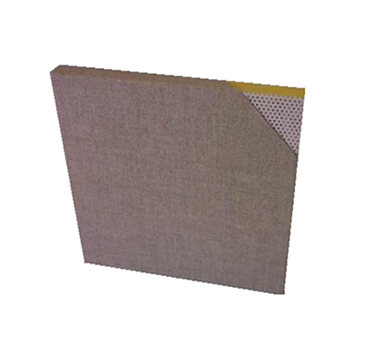
HIP I keeps a wrapped finish. HIP II uses a different heat-formed copolymer surface and is not an interchangeable finish variant.
Configuration ledger
The visible textile does not tell the whole HIP I story. Confirm the face sheet, thickness, edge condition and environmental exposure behind it.
Published reference6–7 PCF rigid fiberglass with a perforated 1/16-inch copolymer face sheet.
Project decisionConfirm the current face construction and the project’s impact requirement.
Published reference11/16, 1 1/16, 1 9/16, 2 1/16 and 3 1/16 inches; maximum 48 × 120 inches nominal.
Project decisionSelect dimensions and confirm any custom-shape or larger-size request.
Published referenceThe product page lists square or kerfed-for-spline edges; the written specification names square edge only.
Project decisionResolve the current available edge and corner condition before detailing.
Published referenceGuilford FR701 2100 Series is listed as standard; other fabrics and perforated vinyls are referenced.
Project decisionCoordinate appearance, cleanability, exposure and test documentation.
Published referenceAdhesive with impaling clips, concealed spline and mechanical clips are published; the specification also references Z-clips.
Project decisionConfirm the attachment that matches substrate, edge and access.
Published acoustic reference
Use the table to frame selection, then request the current ASTM C423 report and mounting configuration for the exact assembly.
Open the HIP I product PDF| Published thickness | Published NRC |
|---|---|
| 11/16 inch | 0.55–0.60 |
| 1 1/16 inches | 0.85 |
| 1 9/16 inches | 0.95 |
| 2 1/16 inches | 1.00 |
| 3 1/16 inches | 1.05 |
The source describes a high-impact face but does not publish a quantified impact test or rating on the product sheet. Do not substitute the phrase “high impact” for a project-specific impact criterion.
QTS’s source states that panel components have an ASTM E84 Class A flame-spread rating of 25 or less. Request current component and assembly documentation for the selected finish.
Published applications
QTS positions HIP I for busy or higher-abuse interiors. The actual protection requirement still needs to be defined by the project team.
Documents & coordination
The current product PDF provides the published construction and performance reference. Confirm the impact criterion, exposure limits, edge and mounting in assembly-specific documents.
Request current project documentsThe HIP I page and PDF include an exposure caution and inconsistent edge-language. Use a current QTS submittal to confirm the chosen edge and any limitations for sunlight or temperature.
Record the selected construction, dimensions, finish, edge and mounting together. Request samples and current acoustic and fire-test documentation that match that assembly.
Confirm field dimensions, substrate, penetrations, adjacent finishes, installer scope and access requirements before fabrication or procurement.
HIP I questions
Use the published information to frame product review, then verify the exact assembly and evidence with QTS.
HIP I is published with fabric or perforated-vinyl finish over a perforated copolymer face. HIP II wraps a perforated copolymer face around the panel edges for a heat-formed, one-piece appearance.
The current product page and PDF describe a high-impact face but do not provide a quantified impact-test method or rating. Request the evidence required by the project.
The written source says the panel should not be exposed to intense direct sunlight or extreme temperatures. Confirm the actual exposure and current limitation with QTS.
The product page lists square or kerfed-for-spline; the specification states square only. Request current product data before detailing the edge.
The published NRC values address absorption. They do not establish wall isolation or an STC rating.
Have a HIP I condition to review?
Share the room use, wall elevations, exposure, expected abuse level, finish intent and performance criteria with QTS.