
Core + face
Published reference6–7 PCF rigid fiberglass with a perforated 1/16-inch copolymer face extending across the panel face and edges.
Project decisionConfirm the current construction and project impact criterion.
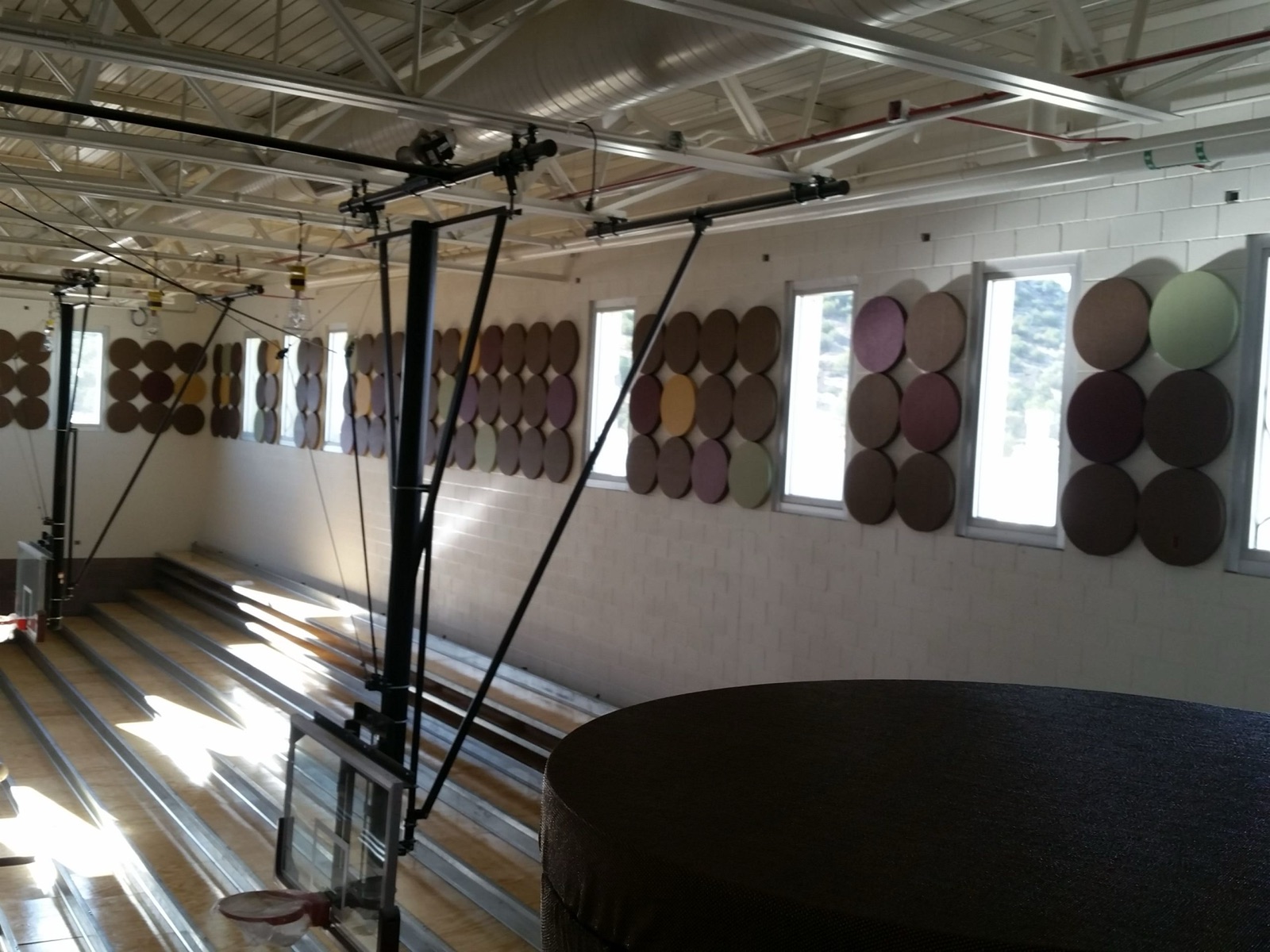
ACC-U-SOUND · Heat-formed high-impact panel
HIP II carries a perforated copolymer face across the panel face and square edges. Its finish, edge and thickness options are deliberately different from HIP I.
HIP II product role
HIP II uses a perforated 1/16-inch copolymer sheet over a 6–7 PCF rigid-fiberglass core, heat-formed around square edges for a one-piece appearance.
Unlike HIP I, the published HIP II finish is selected from QTS copolymer colors rather than wrapped fabric. The source also cautions against intense direct sunlight and extreme temperatures.
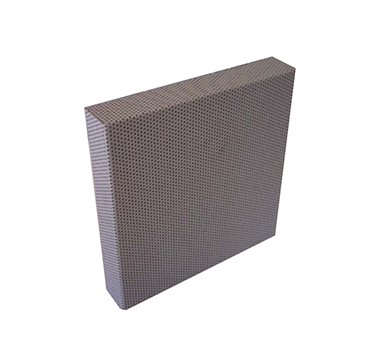
The perforated copolymer surface is integral to HIP II’s published construction; it is not simply an alternate textile for HIP I.
Configuration ledger
HIP II narrows finish and edge choices in exchange for a monolithic published surface. Carry those limits into elevations and details.
Published reference6–7 PCF rigid fiberglass with a perforated 1/16-inch copolymer face extending across the panel face and edges.
Project decisionConfirm the current construction and project impact criterion.
Published reference11/16, 1 1/16, 1 9/16 and 2 1/16 inches; maximum 48 × 120 inches nominal.
Project decisionSelect panel dimensions and verify any custom-size request.
Published referenceHeat-formed one-piece construction; square edge only.
Project decisionCoordinate the square-edge module, reveals, corners and adjacent materials.
Published referenceA variety of QTS standard copolymer colors is published.
Project decisionReview a current color sample and confirm cleaning and test requirements.
Published referenceAdhesive with impaling clips and mechanical clips are published; the written specification names adhesive with impaling clip or Z-clip.
Project decisionResolve the exact mounting and installer scope for the substrate.
Published acoustic reference
Use the published values as a family-level reference and obtain current test documentation for the selected panel and mounting.
Open the HIP II product PDF| Published thickness | Published NRC |
|---|---|
| 11/16 inch | 0.55–0.60 |
| 1 1/16 inches | 0.85 |
| 1 9/16 inches | 0.95 |
| 2 1/16 inches | 1.00 |
No quantified impact test method or rating is published on the current product sheet. Define the project’s impact criterion and ask QTS for supporting evidence.
The source states that panel components have an ASTM E84 Class A flame-spread rating of 25 or less. Verify the current copolymer color and complete assembly documentation.
Published applications
The published application list focuses on high-activity and institutional interiors; project-specific contact, cleaning and exposure requirements remain decisive.
Documents & coordination
Use the HIP II PDF to understand the published construction. Request current color, impact, acoustic, fire and mounting information for the project assembly.
Request current project documentsHIP II is not presented as a fabric-wrapped HIP I option. Its heat-formed copolymer face, square edge, color selection and thickness range are separate product decisions.
Record the selected construction, dimensions, finish, edge and mounting together. Request samples and current acoustic and fire-test documentation that match that assembly.
Confirm field dimensions, substrate, penetrations, adjacent finishes, installer scope and access requirements before fabrication or procurement.
HIP II questions
Use the published information to frame product review, then verify the exact assembly and evidence with QTS.
The published HIP II construction uses a perforated copolymer face heat-formed across the face and square edges. The source does not describe a fabric finish for HIP II.
HIP II has a heat-formed copolymer surface and square edge only. HIP I retains a fabric or perforated-vinyl finish over its high-impact face and publishes different edge and thickness options.
Not from the current published HIP II information, which states square edge only. Ask QTS before detailing any alternate edge.
The current page and PDF do not publish one. Define the required test or abuse condition and request current evidence.
The specification says the panel should not be exposed to intense direct sunlight or extreme temperatures. Confirm the actual project exposure with QTS.
Have a HIP II condition to review?
Share contact level, wall geometry, exposure, color intent, mounting substrate and performance criteria with QTS.