
Core
Published reference6–7 PCF rigid fiberglass.
Project decisionConfirm the selected core, thickness and current assembly data.
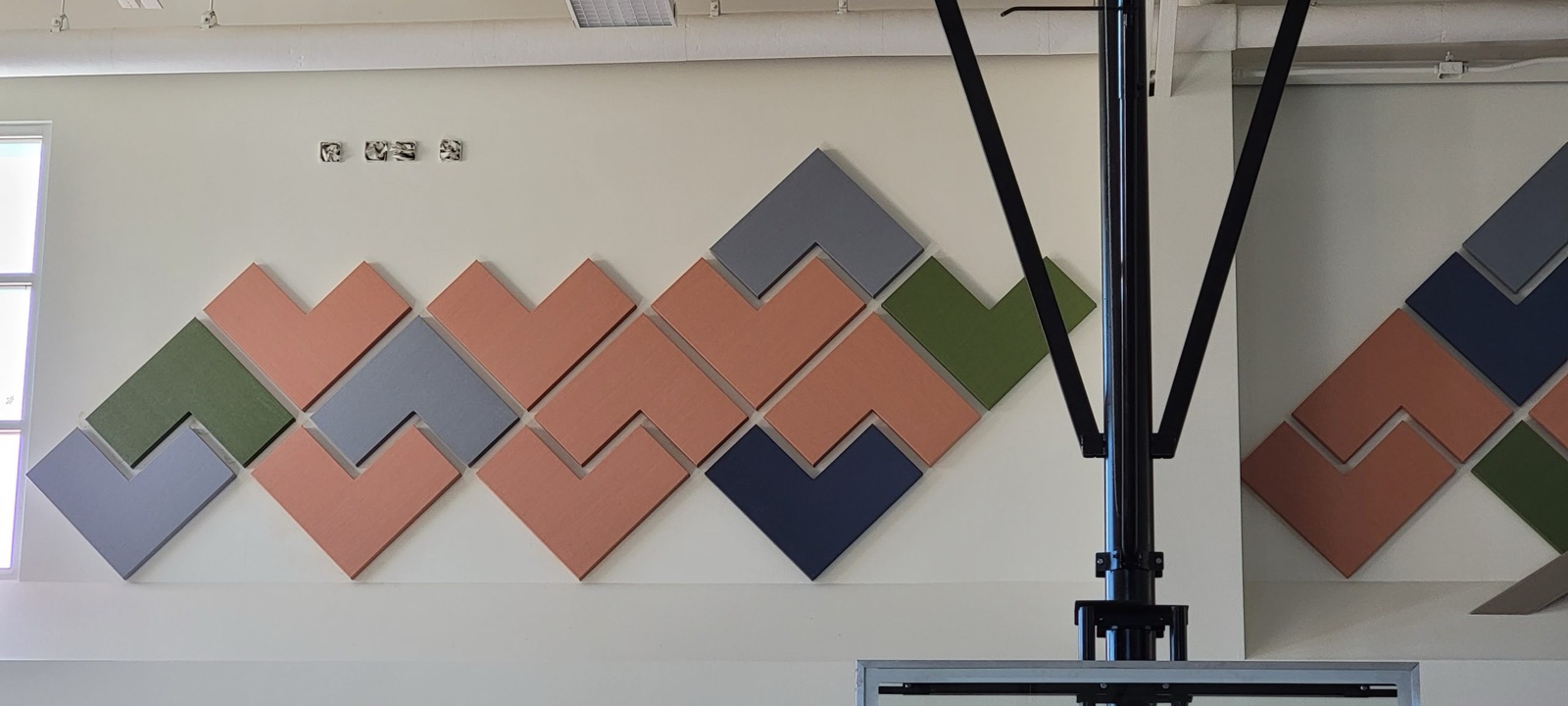
ACC-U-SOUND · Printed acoustic imagery
Quiet Images applies printed imagery to an acoustic wall-panel construction. Plan the artwork, panel breaks, thickness, edge and mounting as one coordinated composition.
QI product role
QI can carry one image on one panel or divide a larger image across multiple panels, allowing the acoustic treatment to become a logo, mural or visual feature.
The current product page identifies a 6–7 PCF rigid-fiberglass core and acoustically transparent printable fabric. Artwork preparation, color expectations, seams and image crop need project-specific confirmation before fabrication.
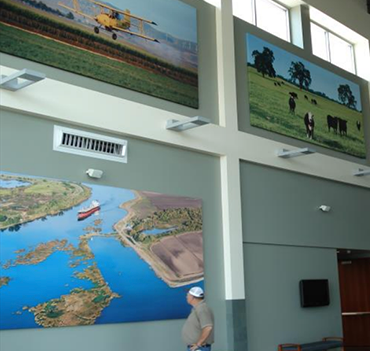
This installed-product image demonstrates photographic output. Confirm current print process, proofing and image requirements for the project.
Configuration ledger
The visual file cannot be separated from the physical assembly. Resolve crop, panel joints, dimensions, edge and mounting before the image is approved.
Published reference6–7 PCF rigid fiberglass.
Project decisionConfirm the selected core, thickness and current assembly data.
Published referenceThe product page states that one image may occupy one panel or multiple panels may butt together to form a larger image.
Project decisionApprove crop, scale, seams, panel map and critical-content clearances.
Published referenceThe product page lists thickness from 5/8 to 4⅛ inches and a maximum 60 × 120 inches. The PDF specification lists different AWP-style options and a 48 × 120-inch standard maximum.
Project decisionRequest current QI-specific dimensions instead of combining the two references.
Published referenceSquare, bevel, miter or radius edges; acoustically transparent printable fabric is the identified QI finish.
Project decisionConfirm edge appearance, printed textile, proofing, color expectation and any alternate finish.
Published referenceAdhesive with impaling clips and mechanical clips are published.
Project decisionCoordinate substrate, panel seams, tolerances and installer scope.
Published acoustic reference
The QI sheet publishes four thickness references. No value is inferred for every thickness within the broader listed range.
Open the QI product PDF| Published thickness | Published NRC |
|---|---|
| 5/8 inch | 0.55–0.60 |
| 1 inch | 0.85–0.90 |
| 1⅛ inches | 0.85–0.90 |
| 2 inches | 1.00–1.05 |
| Other listed thicknesses | Not published |
Artwork and printable fabric are part of the selected assembly. Request the ASTM C423 report that matches the current thickness, face and mounting.
The QI product reference says components were evaluated using the ASTM E84 tunnel test and reports less than 25 / Class A or 1. Confirm current documentation for the exact printed fabric and assembly.
Published applications
QTS publishes QI for rooms where artwork, institutional identity or visual communication belongs on the acoustic wall plane.
Documents & coordination
The published PDF contains useful QI product information but its specification page is labeled for AWP. Request a current QI product submittal, artwork guide and proofing process.
Request current project documentsThe current QI PDF’s second page is titled and written as an AWP specification and conflicts with the QI product page on maximum size and thickness language. Use the product PDF as a reference only and request current QI-specific submittal and artwork requirements.
Record the selected construction, dimensions, finish, edge and mounting together. Request samples and current acoustic and fire-test documentation that match that assembly.
Confirm field dimensions, substrate or structure, penetrations, adjacent systems, installer scope and access requirements before fabrication or procurement.
QI questions
Use the published information to frame product review, then verify the exact assembly and evidence with QTS.
Yes. The QTS product page says panels may butt together to form a larger image. Confirm panel seams, crop and registration through the current proofing process.
The current public page and PDF do not publish complete file-resolution, color-profile or bleed requirements. Ask QTS for the current artwork guide before final file preparation.
The product page lists 60 × 120 inches, while the PDF’s AWP-style specification states 48 × 120 inches. Confirm the current QI-specific maximum and orientation.
The published values belong to specific source configurations. Request test documentation for the selected printed fabric, thickness and mounting rather than assuming every print assembly is identical.
Approve image crop, scale, color expectation, panel numbering, seams, edge treatment, orientation and any critical content that must avoid a joint.
Have a QI condition to review?
Share the image, intended crop, wall dimensions, panel-break concept, viewing condition and performance criteria with QTS.