
Define the condition.
Locate the treatment, describe how the room is used and identify the existing or proposed surfaces around it.
Bring
Plans, elevations, ceiling plans, room use, photos and project location.
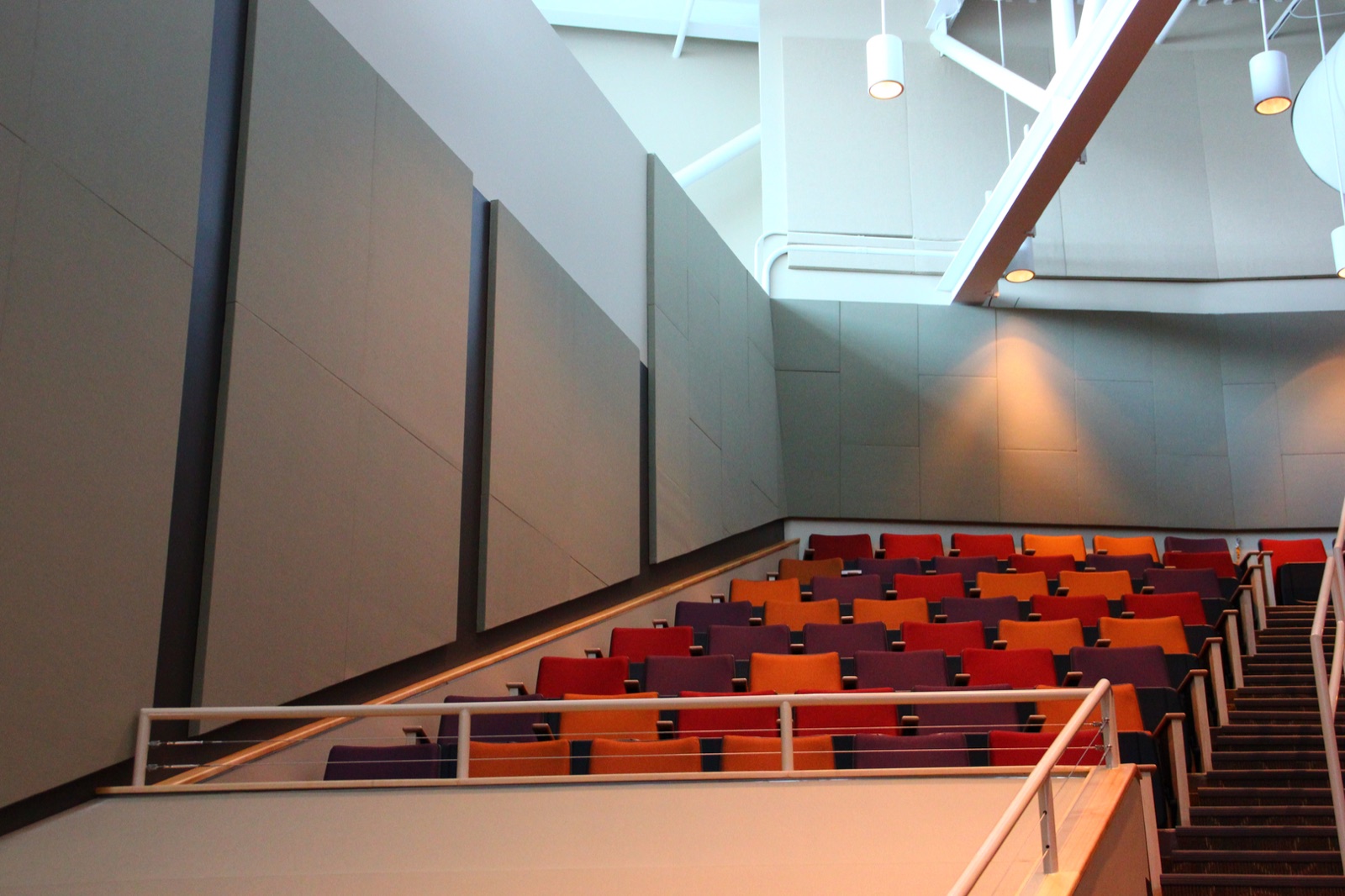
Specifier resources · Commercial acoustic products
Bring QTS the room, drawings, finish direction and performance criteria. QTS can help organize the product family, configuration and current documentation conversation before it moves into the project package.
Product information should be confirmed for the selected assembly, thickness, finish and project condition.
The selected product is one part of a larger architectural condition: placement, module, finish, mounting and current supporting information all have to describe the same assembly.
QTS manufactures wall panels, ceiling clouds, hanging baffles, diffusers and specialty acoustic treatments for commercial projects. The useful starting point is not an isolated product code—it is the room and the work the project team needs the system to do.
Share the design condition early enough to compare appropriate product paths, identify details that need confirmation and keep visible decisions aligned with fabrication and mounting realities.
Give each decision a clear owner and source. That keeps a finish selection from drifting away from the assembly or condition it was meant to describe.
Locate the treatment, describe how the room is used and identify the existing or proposed surfaces around it.
Plans, elevations, ceiling plans, room use, photos and project location.
Record the acoustic objective established by the project team and keep it tied to the selected product configuration.
Which published information applies to the exact assembly being considered.
Work through placement, module, edge, fabric or graphic direction and the transitions that make the treatment belong in the room.
Physical samples and current finish information before recording a selection.
Identify dimensions, substrate, penetrations, suspension and adjacent construction before the detail becomes a field question.
The configuration and mounting condition that the project team has evaluated.
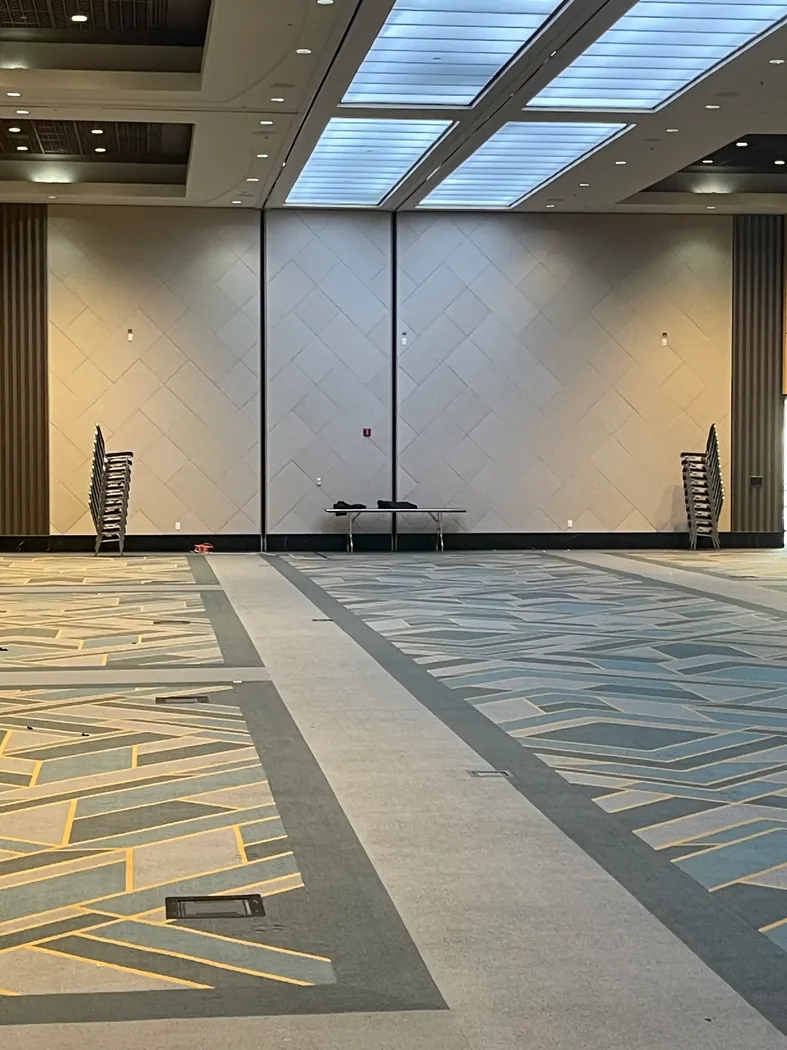
Visible acoustic treatment carries the same design responsibilities as the surfaces around it. The pattern has to resolve at edges, fixtures and transitions; the finish has to be reviewed in the actual product context; and the mounting condition has to support the intended composition.
The ACC-U-SOUND library contains 12 distinct families. Keep absorbers, suspended treatments, diffusers and specialty conditions separate while the project team evaluates the room.
Compare AWP, ATP, TP, HIP I, HIP II and QI as distinct product paths for wall fields, functional surfaces and graphic applications.
Review wall systemsReview CP, HB and LDB when the design condition moves the acoustic treatment to the ceiling plane or suspends it within the room.
Review ceiling systemsBSD and PSD are diffuser families. Evaluate them as sound-distribution products rather than treating them as interchangeable absorptive panels.
Review diffuser familiesCBT is a corner-mounted low-frequency absorber and should remain a distinct path within the specialty group.
Review CBTThe sequence is simple, but each handoff matters: start with the room, narrow the product path, coordinate what will be built and then request the current information that matches it.
Send drawings, photos, dimensions, use, project location and the criteria already established by the team.
Identify which placement and function group gives the project conversation a useful starting point.
Align configuration, geometry, finish, substrate and mounting with the architectural intent.
Confirm the product, assembly, finish and supporting documents the project team intends to evaluate.
A confident project record distinguishes general product reference from information that has been checked for the selected configuration.
Use the product atlas and linked source material to understand the published family, function and available starting points.
Status: starting pointMatch current information to the exact product, thickness, assembly, finish and project condition under evaluation.
Status: confirm for projectRequest physical material when color, texture, construction or edge treatment affects a visible design decision.
Status: request availabilityReview the current resource that corresponds to the selected product and intended condition before it is included in the project record.
Status: use current guidanceMove directly from the open question to the resource or project action that can resolve it.
Use the technical resource library to locate product, mounting, care, warranty and environmental information.
Open technical resourcesDescribe the product family, finish direction and project so sample availability can be confirmed.
Request samplesSend the dimensions, geometry, finish intent and mounting context for a project-specific conversation.
Explore QTS CustomThese answers keep the page useful without replacing the project team’s evaluation of a selected assembly.
Start with the room: plans or elevations, dimensions, photos when available, room use, treatment location, project location and the performance or finish criteria already established by the team.
Yes. QTS can review the project context and help organize the conversation around product family, configuration, finish, mounting and current product information. The project team remains responsible for its final design and performance evaluation.
Do not assume that it does. Product information can depend on the family, thickness, assembly, finish and test condition. Request current information for the exact configuration being evaluated.
Request a physical sample when color, texture, visible construction, edge treatment or the relationship between finish and product family affects a project decision. Confirm the available format for the request.
Depending on the selected product and available source material, the team may request current product, test, mounting, maintenance, warranty and environmental information. Confirm availability and version for the project rather than treating a general page or older file as the final project record.
The project team evaluates the selected product and documentation against its design, code, performance and construction requirements. QTS can provide product information and help clarify the configuration being considered.
Have a room, drawing or custom condition?
Share the plans, dimensions, photos, finish direction and criteria already established by the team. QTS can help organize the acoustic-product decisions that follow.